Who I am
DevOps engineer, born and based in Santo Domingo. This page is the long version of how I got here.
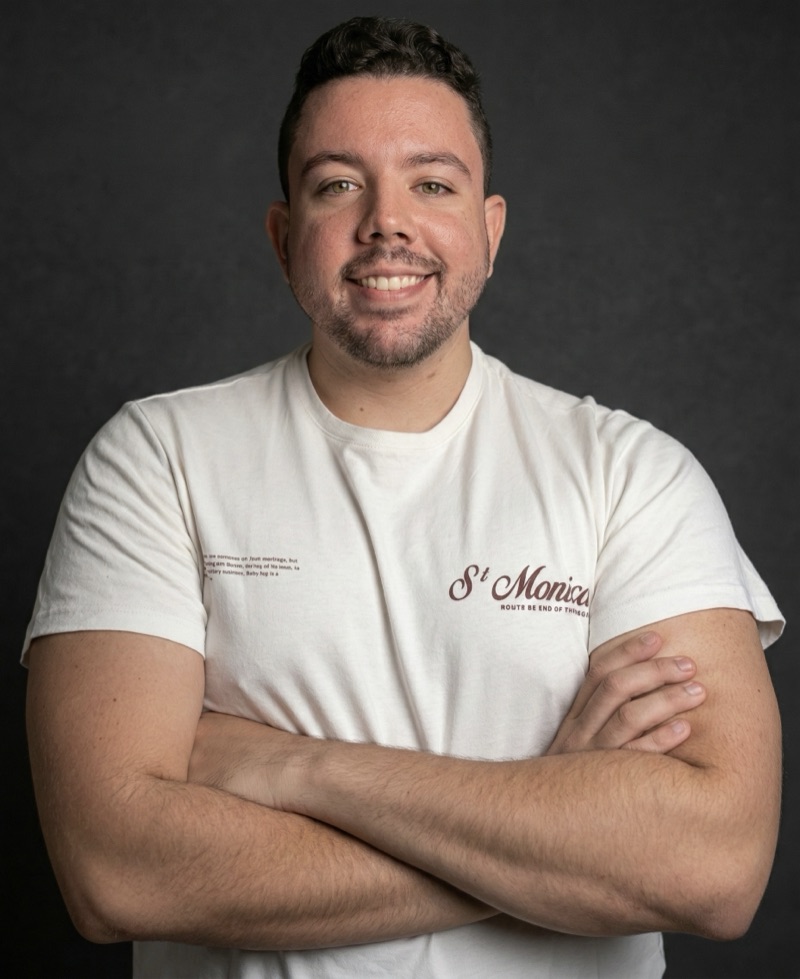
- Feb 2002Born in Santo Domingo, Dominican Republic
- 2019Started Computer Science at PUCMM
- 2020 – 2022Call-center jobs, then junior DBA at a car insurer
- Apr 2022Hired by Shadow-Soft (now Arctiq) — the start of DevOps work
- 2024Graduated PUCMM · capstone on neural-network fruit ripeness
- 2025Co-founded KODEPULL SRL with Fernando Reyes
- TodayDevOps Engineer in Santo Domingo — Arctiq, INSPYR, KodePull
Where I'm from
I was born in Santo Domingo on February 17th, 2002, and grew up in the suburbs of the capital. My father is American — a pilot, private most of his career but with a commercial license; he's instructed airplane courses at IDAC here in DR and in Denver. My mother is Dominican, an OB-GYN from Higüey in La Altagracia. I grew up with both.
Dual citizenship has always been more passport than experience. We travelled to the US often when I was a kid — my paternal grandmother lived in Massachusetts before moving back to DR — but most trips were Disney and tourism, not visiting family. The US passport is useful; the cultural pull is smaller than the document suggests.
My dad raised me old-fashioned. Strict, with the kind of rule that every reward maps to behavior and effort — not sacrifice, just effort. My mom taught me to read people for what they're actually worth, not what they look like at first glance. Both stuck.
I was an easy-going kid, loud when I wanted attention, then increasingly the opposite as I got older: a brain that prefers to zone in on one specific problem and stay there until the work feels good enough to be proud of.
How I got into DevOps
I became the family's PC kid by accident. I downloaded too much from Softonic, picked up too many viruses, and learned what antivirus was by needing one. From there it spiralled: opening cases when something stopped booting, swapping DDR2 sticks, replacing CD-ROMs, figuring out ADSL, reinstalling Windows from a disc. Anything tech-shaped at home eventually became my problem to solve — even when I had no idea how — and that was the part that taught me how to learn. Pirated games and cracked software helped, in their own way.
Junior year of high school we got pseudocode, flowcharts, and a little C#. None of it lit me up at the time. But when it came time to pick a university degree, it was obviously the right choice.
I studied Computer Science at PUCMM in Santo Domingo. I'd evaluated FIU, but the price gap couldn't be justified. Looking back, PUCMM was the right call. I can't remember a single career class that was boring or that didn't teach me something I still use: compilers, threads, discrete math, web design, digital systems (we built a vending machine in Verilog), databases, the language tour through functional and declarative — Prolog included. My capstone was a two-stage neural network that recognized a fruit, then estimated its ripeness from a photo. This was just before the LLM era went mainstream, and building it from scratch taught me what the abstraction layers above it now quietly hide.
The first paying jobs were call centers. I wanted to not have to ask my parents for money to go out or buy myself things, and a call center paid. The real lesson was empathy for the person on the other side of any service line. That one stuck.
The first job in my field was as a junior database analyst at a car insurance company. I learned more about office gossip than about enterprise databases, and pretty quickly decided it wasn't where I'd grow.
In April 2022, Shadow-Soft (now Arctiq, since March 2026) found a CV I'd dropped at the university. They interviewed me out of Atlanta, decided I was worth investing in, and taught me everything I know about the DevOps side of this work today: CI/CD, infrastructure as code, security, cloud, Linux. They put me on an engagement that I'm still on, paid for the certifications, and let me build through real production work — lift-and-shift on 60+ apps, then a full automation rebuild on GitLab CI/CD into EKS, with SSO from Entra ID into AWS and Grafana for the visibility we needed to trust the system.
In parallel I've taken on other engagements through different consultancies — Dominican financial institutions, and a large multi-region platform running 300+ microservices on a mostly Azure stack. Different scale, different lessons. I cover the specifics, employer by employer, under Work.
On the side I still build for myself: web apps, small platforms, the occasional paid system for a business that needs one. That's where my development chops stay sharp.
What drives me
Two things, mostly.
One: depth. I can zone into a specific problem and not surface until I understand it — not the Wikipedia summary, the thing underneath. Most of what I'm proud of came from following that thread further than was strictly necessary, and being okay with the discomfort of not knowing yet.
Two: I work for the version of done that I'm proud of, not the version that just ships. My dad's rule — every reward maps to effort — was meant for chores, but it scales into engineering work surprisingly well.
How I work
Comfortable with context-switching — multi-tasking doesn't drain me the way it does some people. What stays constant is the analysis: I want to understand what's being asked before I touch the keyboard, and I want the solution to be the cleanest fit for the actual use case.
The pace matches the situation. Critical alert? Move fast, fix it, dig into root cause after. Big architectural decision? Slow down, weigh trade-offs, sleep on it. Both rhythms feel like the same instinct — get the thing right, given the constraints.
Direct in writing, direct in person. I'll say "I'm not sure" before guessing, and I'll push back if something's wrong even when nodding along is faster.
Two languages depending on what fits: English for the precise and technical, Spanish — especially Dominican Spanish — for everything that needs warmth, nuance, or a real conversation.
How to reach me
Email is the right channel: [email protected].